



AI Risk Reality Check: What to Do Next | Resilience Risk Briefing
Attackers are scaling with AI while enterprises deploy it faster than governance can keep up. Here’s what to prioritize.

What actually reduces AI risk? A cross-functional reality check
AI is reshaping cyber risk fast. Attackers are using it to scale phishing, automate discovery, and speed up exploitation, while enterprises deploy AI tools across the business, often faster than governance, legal oversight, and security controls can keep up. Security teams, legal teams, and boards are all asking the same question: what actually reduces exposure?
Series host Jud Dressler, Director of Resilience’s Risk Operations Center, is joined by Chris Wheeler (CISO), Mehvish Femia (Chief Legal Officer), and Paragi Shah (Senior Security Operations Engineer) for a practical, cross-functional discussion. They cover how AI is changing cyber loss patterns, the emerging AI attack surface, what AI security tooling means in practice, governance and control priorities for 2026, and how boards are evaluating AI-related risk. The session closes with live Q&A.
About Speakers

Chris Wheeler

Chief Information Security Officer
Chris Wheeler is a seasoned cybersecurity leader with a diverse background in military service and the private sector. He currently serves as the Chief Information Security Officer at Resilience. Previously, Wheeler spent nearly five years as a vice president at Morgan Stanley on the Global Cyber Incident Response Team (CIRT), where he managed the Senior Analyst Team and SOAR program. His earlier experience includes leading an analytic engineering team at Arbor Networks and serving as a US Naval Officer, qualified in both Surface and Information Warfare. He is a graduate of the United States Naval Academy.
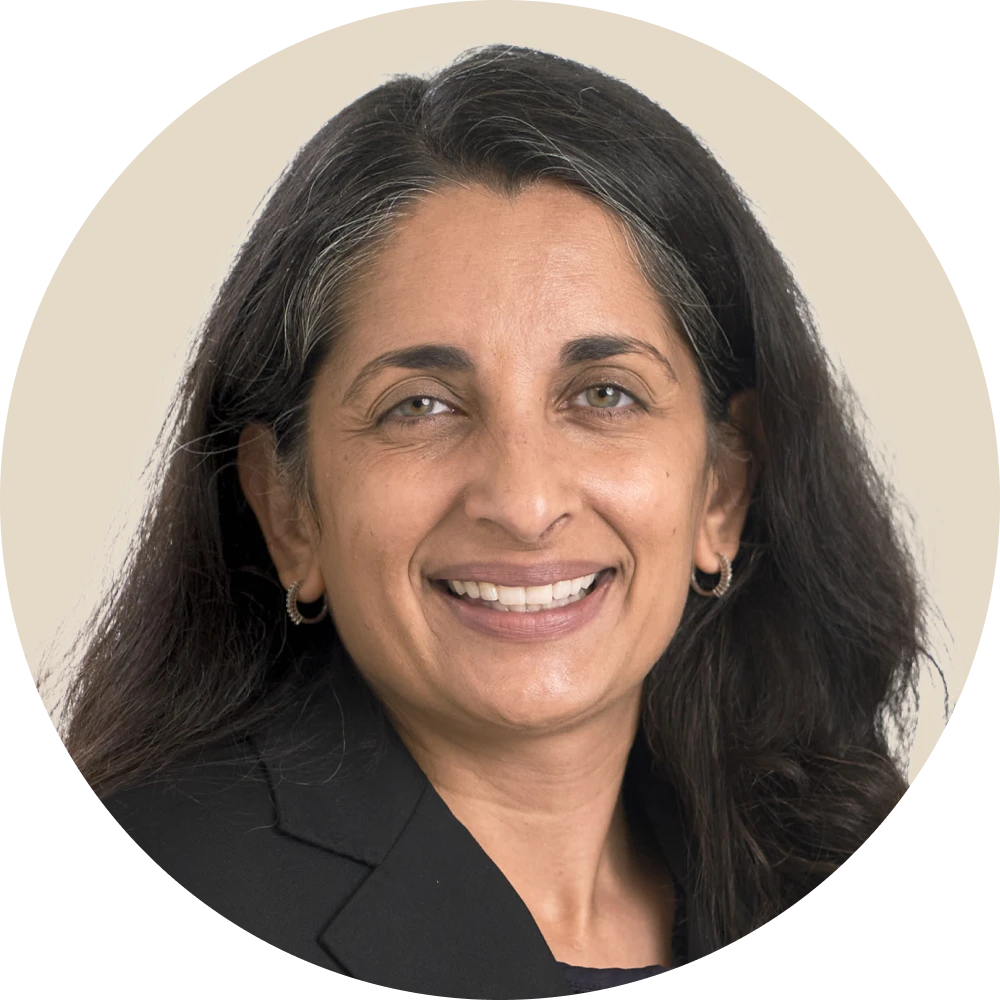
Mehvish Femia
Chief Legal Officer
Mehvish Femia is the Chief Legal Officer at Resilience. Prior to joining Resilience in 2021, Femia held roles at Digital Partners, Beazley, and The Hartford, where she managed regulatory compliance, contracts, legislative affairs, and operations. Femia holds a JD from the University of Connecticut and a BA in English and Psychology from the University of Texas at Austin.

Paragi Shah
Senior Security Operations Engineer
Paragi Shah is a cybersecurity leader with over 20 years of experience, currently focused on enabling secure AI and advancing security automation and controls at Resilience. Prior to joining Resilience in 2025, she held roles at Trustwave, where she led the development of scalable threat data ingestion pipelines, SOAR platforms, and perimeter defense solutions. She holds a Master’s degree in Computer Science from Temple University and an undergraduate degree in Mathematics.

Judson “Jud” Dressler
Director, Risk Operations Center
Judson Dressler is the Director of the Risk Operations Center. Dressler recently joined Resilience after serving 20 years in the U.S. Air Force. He was previously the Permanent Professor and Head of the Department of Computer and Cyber Sciences at the United States Air Force Academy, where he taught more than 1,200 cadets each year and conducted long-term artificial intelligence and cybersecurity research. He served as the Commander of the 835th Cyberspace Operations Squadron, where he led 134 cyber airmen to conduct threat-focused, intelligence-driven defensive cyberspace operations. Dressler holds a PhD in Computer Science from Rice University and a Master’s in Computer Science from the U.S. Air Force Institute of Technology.
Any company that sells hardware or software with network connectivity into an EU member state has to report vulnerabilities and incidents affecting that product. The regulation calls these products with digital elements, and it applies to the manufacturer regardless of where the manufacturer is based, so a US firm with no EU presence is covered from the moment its first unit ships into the single market.